Gender equality and advancement of women in society are one of the fundamental principles of democracy and social order, which is based on the autonomy of the individual rights and freedoms. According to that, everyone has the right to participate in decisions that define her or his life. This right is based on the ideal of equal participation in decision-making for women and men. Women should participate equally with men in all processes of everyday life because they know the best their condition in which they are in (UNDP, 2014). They should be involved in all decision-making levels because they have their own views in the public and private life.
According to statistics from the International Labour Organisation (ILO), in the last twenty years (1995-2015) the participation of the women in the labor market worldwide has decreased from 52.4% to 49.6% (ILO, 2015). In terms of the representation of women in politics within the 193 members of the United Nations, women account for only 22.8% of the national parliament (The Inter-Parliamentary Union, 2016). These figures confirm that women worldwide are underrepresented in all areas of socio-political life, they are underrepresented in the parliaments and positioned away from all decision-making levels.
The factors that hinder the participation of women in public and political life are varied and depend on the socio economic development, culture, geographical location and political system. By disconnecting, women from decision-making bodies are restricted and the opportunities for strengthening the fundamental principles of democracy in a society. At the same time, this limitation has a large effect on the economic development and contribute to discouraging women to achieve gender equality. If men monopolize the political process with the adoption of laws that affect society as a whole, in practice such decisions do not always balance the interests of men and women. Furthermore, in the Millennium Development Goals, it was found that equal participation of women and men in power and decision-making is part of their basic right to participate in political life and at the heart of gender equality. Women need to be active participants in determining and implementing the development agenda (United Nation, 2016).
Women who want to get involved in politics realize that the political, public, cultural and social environment is often negatively inclined towards them. In theory, the right to participate in elections, to run and to select a candidate are based on the right to vote. In reality, the right to vote for the woman remains limited, because the candidates in the elections are mostly men. This fact is true not only for semi-democratic countries and developing countries but also for countries with established democracies.
In Macedonia, the Ministry of Labour and Social Policy (MLSP) in the 2011 submitted document for women’s participation in public and political life in local government to the Government. From the same may be observed that after the adoption of the Electoral Code in 2009, which foresees a quota for female candidates, the number of women councilors increased by about 27%, of a total 1390 councilors, 300 were women. Compared with 2005, 1 the proportion of women at the local level was increased by 4.3%. According to MLSP, it can be noted that there is a disparity between some municipalities in Macedonia. Although is not specified in which municipalities, MLSP claim that in some municipalities the participation of women is over 41% while the other is below 20% (Ministry of Labour and Social Policy, 2011). It is an unsatisfactory situation of the women mayors, and it is due to the fact that the new legal solution does not recognize an affirmative action for women mayors. In terms of employment, the employment rate among women in 2005 amounted to 30.1%, while in 2013 increased to 40.4% or an increase of 10.3 percentage points. However, despite the increase, the employment rate is less than in men, which amounts to 59.6% (Pejkovski, 2013).
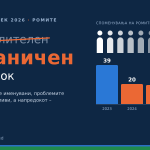
Regarding the participation of Roma women in public and political life, there is a general conclusion that women from marginalized groups are virtually excluded from local decision-making processes. Within this framework, generally, there are few studies that quantitatively describe the position of Roma women in Macedonia.
Therefore, this study aims to determine the condition and position of Roma women in public life and the involvement of Roma women in public administration and political parties in the country. Also, this research examines the attitudes and perceptions of Roma women for the decision-making processes and involvement in political life.